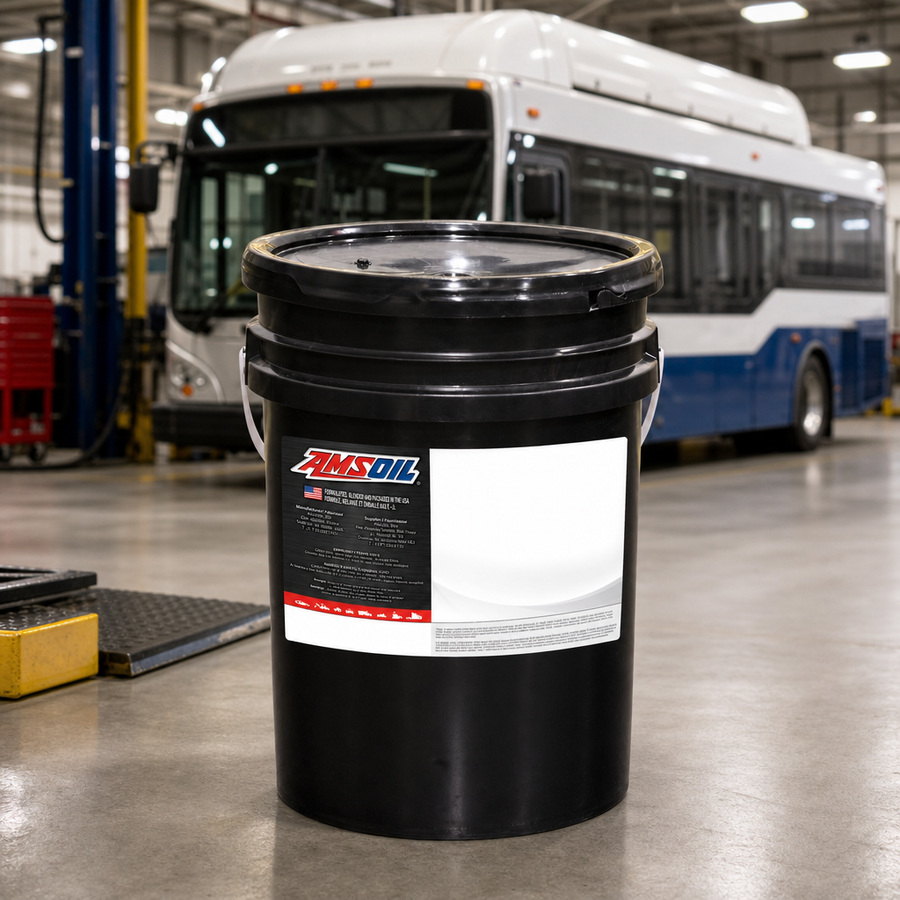
AMSOIL 100% Synthetic Vehicular Natural Gas Engine Oil
AMSOIL Synthetic Vehicular Natural Gas Engine Oil is formulated specifically to meet the special requirements of natural gas fueled engines used in vehicles and mobile equipment. It delivers superior protection and performance in applications calling for a 15w-40 low-ash lubricant.
Add an AMSOIL Preferred Customer membership to the same cart to unlock up to 25% off qualifying products. Existing members can sign in, and qualifying orders currently over $100 can ship free.
Product data sheets
View, download, or save a copy of the Product Data Sheet or Safety Data Sheet for AMSOIL 100% Synthetic Vehicular Natural Gas Engine Oil.
AMSOIL 100% Synthetic Vehicular Natural Gas Engine Oil
AMSOIL 100% Synthetic Vehicular Natural Gas Engine Oil (ANGV) is a low-ash SAE 15W-40 lubricant formulated for over-the-road and mobile equipment engines burning compressed natural gas (CNG), liquefied natural gas (LNG), or liquefied petroleum gas (LPG). The formulation targets the heavy thermal loading, hot valvetrain conditions, and stoichiometric combustion chemistry seen in transit buses, refuse trucks, school buses, and medium and heavy-duty delivery fleets running spark-ignited gaseous fuel engines.
Excellent valvetrain wear protection
Natural gas combustion runs hotter and drier than diesel, which strips lubricant film at the valve face and accelerates valvetrain wear. ANGV pairs a 100% synthetic base oil with an anti-wear additive system that posts a 0.44 mm Four-Ball Wear scar (ASTM D4172). High zinc and phosphorus levels protect both roller and slider followers under sustained spark-ignition cylinder pressure.
The same chemistry meets the wear, oxidation, and deposit demands of the Cummins CES 20074 specification used by ISL G and ISX12 G natural gas engines, which dominate North American transit and refuse fleets.
Low-ash formulation that fights valve recession
Low sulfated ash is a hard requirement for natural gas engine oil because excess metallic detergent forms abrasive deposits in the combustion chamber, accelerating valve seat recession and pre-ignition. ANGV uses a low-ash, low-phosphorus-balanced detergent system that minimizes valve stem and combustion chamber deposit formation while still carrying a Total Base Number of 5.84 to neutralize nitric acid and other byproducts of high-temperature gas combustion.
Shear-stable viscosity across the duty cycle
Stop-and-go transit and refuse routes cycle the oil between hot idle dwell and full-throttle pulls all day. ANGV is engineered to hold grade through that workload with a 100°C viscosity of 14.5 cSt (ASTM D445), a viscosity index of 155, and a 4,730 cP cold crank result at -20°C (ASTM D5293). Shear stability protects the hydrodynamic film at the bearings during heavy lugging without sacrificing cold-start flow on cold morning pull-out.
Low volatility for emissions hardware
Volatilized oil is a leading source of three-way catalyst poisoning and oxygen sensor fouling on stoichiometric natural gas engines. ANGV posts a NOACK volatility of 6.7% weight loss (ASTM D5800), well below the 13% NOACK ceiling of the API CK-4 diesel category. Lower volatility means less oil pulled into the combustion chamber, less ash carried to the catalyst, and longer service life for the emissions hardware that natural gas fleets are required to keep certified.
Long drain capability with used oil analysis
Vehicular natural gas oil is normally drained on the OEM interval, but ANGV has demonstrated extended drain capability when service life is monitored with a used oil analysis program. Trending TBN, oxidation, nitration, viscosity, and wear metals lets fleet managers safely push beyond the placard interval without risking catalyst damage or valve seat failure. The oil filter should still be changed at the engine manufacturer's recommended interval whenever the drain is extended.
Recommended applications and service intervals
ANGV is recommended for spark-ignited mobile applications fueled by CNG, LNG, or LPG, and meets the requirements of Cummins CES 20074. For service interval guidance, follow the engine manufacturer's published interval for the operating duty cycle, with the option to extend that interval through used oil analysis trending.
Transit buses and shuttle buses on Cummins ISL G, ISX12 N, or B6.7 N engines.
Refuse haulers, school buses, street sweepers, and medium and heavy-duty delivery trucks running CNG, LNG, or LPG.
Not for use in two-stroke engines, racing applications, or stationary power generation engines that call for a different lubricant family.
Outside the United States and Canada, follow OEM viscosity and specification guidance for the local fuel composition and operating environment.
Pair ANGV with a high-efficiency, full-flow oil filter sized to the engine, and change the filter at the OEM interval when extending oil life. The formulation is compatible with conventional and other synthetic motor oils, but mixing shortens service life and reduces the protective margin. Aftermarket oil additives are not recommended.
Typical technical properties
Property
Value
SAE viscosity grade
15W-40
Kinematic viscosity at 100°C, cSt (ASTM D445)
14.5
Kinematic viscosity at 40°C, cSt (ASTM D445)
97.4
Viscosity Index
155
Cold Crank Simulator, cP at -20°C (ASTM D5293)
4,730
Flash Point, °C (°F), COC (ASTM D92)
238 (460)
Fire Point, °C (°F), COC (ASTM D92)
258 (496)
Pour Point, °C (°F) (ASTM D97)
-39 (-38)
NOACK Volatility, % weight loss (ASTM D5800)
6.7
Four-Ball Wear Test, mm scar (ASTM D4172)
0.44
Total Base Number (TBN)
5.84
Order AMSOIL 100% Synthetic Vehicular Natural Gas Engine Oil
ANGV is stocked in three fleet-friendly packages: 5-gallon pail (ANGV05-EA), 55-gallon drum (ANGV55-EA), and 275-gallon tote (ANGV27-EA). All AMSOIL lubricants are backed by the AMSOIL Limited Warranty. To verify the right viscosity and specification for a specific fleet engine, start with the AMSOIL vehicle lookup guide, and review related heavy-duty product context in the AMSOIL diesel oil guide. Order Now
Frequently asked questions
What is Cummins CES 20074 and which engines require it?
CES 20074 is the Cummins low-ash specification for spark-ignited natural gas engines. It governs sulfated ash, phosphorus, wear, and oxidation performance. Cummins ISL G, ISX12 N, B6.7 N, and L9 N engines used widely in transit, refuse, and vocational fleets call for an oil meeting CES 20074, which ANGV is formulated to meet.
Can ANGV be used in propane (LPG) and dual-fuel mobile engines?
ANGV is recommended for vehicular and mobile-equipment engines fueled by CNG, LNG, or LPG. The same low-ash, low-volatility chemistry that protects CNG transit buses also protects LPG-powered delivery trucks and forklifts that use a comparable spark-ignited natural gas engine platform. Always confirm the OEM specification before switching.
Why does a natural gas engine need a low-ash oil instead of a regular diesel oil?
Natural gas burns cleaner than diesel, so the oil sees less soot but more direct exposure to high combustion temperatures at the valve face. A standard diesel motor oil carries more sulfated ash to handle soot loading, and that ash forms abrasive deposits in a gas engine combustion chamber, leading to valve recession, pre-ignition, and three-way catalyst contamination. ANGV uses a balanced low-ash detergent system designed for that combustion chemistry.
How long can drain intervals be extended on this oil?
ANGV is capable of extended drain intervals when service life is monitored with a used oil analysis program; a hard mileage or hour cap is not published for this product. The practical interval depends on the engine model, duty cycle, fuel quality, and oil analysis trends for TBN depletion, oxidation, nitration, viscosity, and wear metals. Change the oil filter at the OEM interval whenever the oil drain is extended.
Is ANGV compatible with three-way catalysts and oxygen sensors?
Yes. The low-ash, low-phosphorus-balanced formulation and 6.7% NOACK volatility are designed to limit the amount of metallic ash and phosphorus carried into the exhaust stream, which protects three-way catalyst function and extends oxygen sensor life on stoichiometric natural gas engines that depend on tight emissions hardware to stay certified.
Can ANGV be mixed with the existing oil in the sump?
ANGV is technically compatible with conventional and other synthetic motor oils, so a partial fill will not harm the engine. Mixing dilutes the synthetic performance margin and shortens service life, so a full drain and refill is the right path when switching to ANGV. Aftermarket oil additives are not recommended for use with this product.