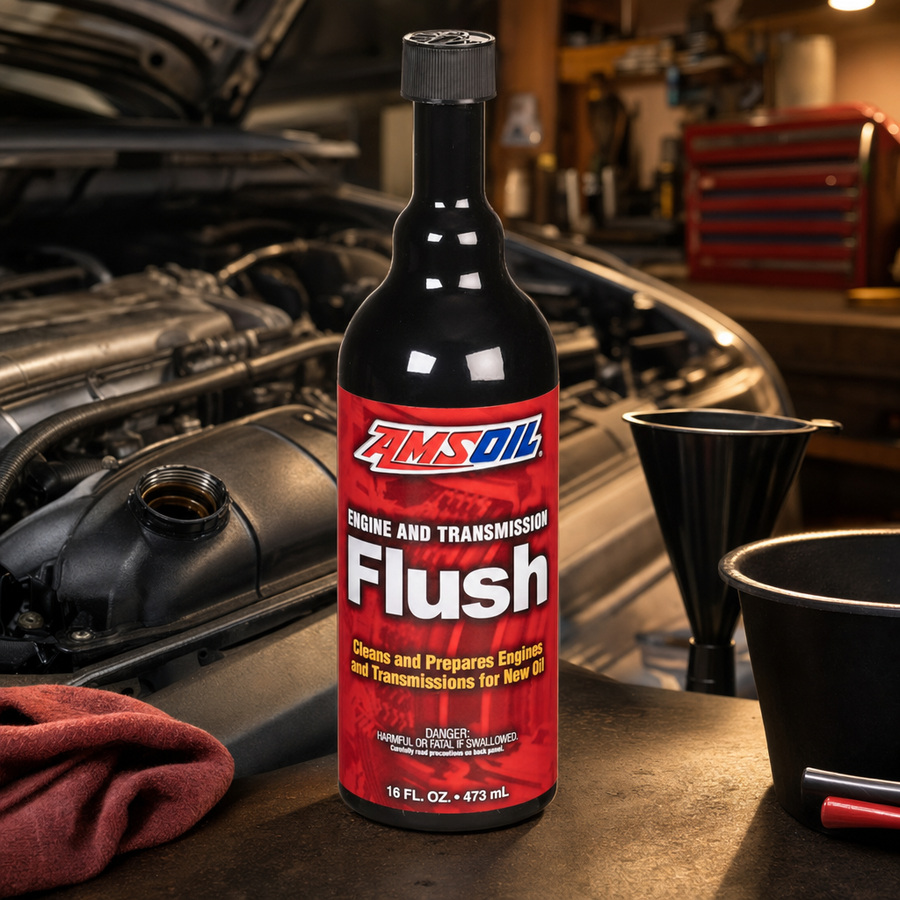
AMSOIL Engine and Transmission Flush (FLSH) helps restore fuel economy, increase operating efficiency and reduce emissions in gasoline and diesel engines, and automatic transmissions. Its potent, detergent-based formula cleans sludge and deposit build-up, promoting reduced oil consumption. AMSOIL Engine and Transmission Flush is safe on parts and can be easily disposed of with waste oil.
Add an AMSOIL Preferred Customer membership to the same cart to unlock up to 25% off qualifying products. Existing members can sign in, and qualifying orders currently over $100 can ship free.
Product data sheets
View, download, or save a copy of the Product Data Sheet or Safety Data Sheet for AMSOIL Engine and Transmission Flush.
AMSOIL Engine and Transmission Flush (FLSH) is a detergent-based pre-service cleaner formulated to dissolve and disperse sludge, varnish, and deposit build-up in gasoline engines, diesel engines, and automatic transmissions before an oil or fluid change. The light-base-oil chemistry is compatible with seals, gaskets, and both petroleum and synthetic oils, and the spent product disposes of cleanly with the waste oil at any standard recycling drop-off.
Detergent-based formula targets sludge and varnish
Stop-and-go driving, prolonged idling, short trips that never reach full operating temperature, towing, airborne dirt ingestion, fuel dilution, water condensation, and oxidized oil all promote sludge build-up in motor oil and automatic transmission fluid. Once that sludge settles, it clogs narrow oil passages, restricts flow to the upper valve train, and forms varnish on the clutch plates inside automatic transmissions. FLSH uses a multi-use formulation of light base-oil technology with powerful detergents and dispersants that dissolves these deposits and lifts them into suspension so they drain out with the old fluid.
Engineered for one-treatment cleanup
FLSH is built to deliver visible results in a single 10 to 15 minute idle treatment. In gasoline and diesel engines, the formula helps loosen sticky valves and rings, minimizes blow-by, reduces emissions, helps quiet lifter noise, and lowers operating temperatures through sludge removal. In automatic transmissions, it cleans deposits in the oil cooler and ports, helps unclog fluid passages, cleans deposits and varnish from clutch plates, and reduces shift delay for smoother operation and longer transmission life.
Safe on seals and compatible with petroleum or synthetic oil
The detergent-based chemistry is compatible with seals and gaskets and works alongside both petroleum and synthetic oils, so the flush slots in ahead of any oil change regardless of which lubricant was in the sump before. There is no aggressive solvent base that risks softening elastomers, no need to flush twice, and no follow-up rinse required before refilling with fresh oil or fluid.
Easy disposal with the waste oil
Because the formula is detergent-based rather than solvent-based, the used flush mixes with the drained oil and disposes of through the standard waste-oil stream at any quick-lube, auto parts store, or recycling center that accepts used motor oil. There is no separate hazmat step and no specialty disposal procedure to plan around.
Ideal for neglected and unknown-history vehicles
FLSH is the first step toward restoring poorly maintained equipment to top-notch performance. It is the right pre-service treatment for vehicles bought used with no documented maintenance history, vehicles that ran a low-quality lubricant for long stretches, vehicles that missed several oil changes, and engines or automatic transmissions that show signs of varnish, lifter noise, or sluggish shifts before a planned conversion to AMSOIL synthetic oil or synthetic ATF.
Recommended applications and service intervals
AMSOIL Engine and Transmission Flush is recommended for gasoline engines, diesel engines, and automatic transmissions. It is safe enough to be used at every oil change, though most service plans use it before a fluid change on neglected equipment or once or twice a year on regularly maintained vehicles. Confirm the correct refill viscosity, fluid spec, and filter for the application in the AMSOIL vehicle lookup guide before draining.
Sumps up to 10 quarts: one 16 oz. bottle per treatment.
Larger sumps: two bottles (32 oz.) for 10 to 20 quarts, three bottles (48 oz.) for 20 to 30 quarts, four bottles (64 oz.) for 30 to 40 quarts.
Idle the engine or transmission for 10 to 15 minutes, then immediately drain and refill with new oil or fluid and a new filter.
Not recommended for differentials, and not recommended for automatic transmissions that do not have a removable pan or accessible filter.
Pair the treatment with a fresh oil filter and the correct viscosity grade for the engine or the correct OEM-spec fluid for the transmission. Because FLSH is compatible with petroleum and synthetic oils, any AMSOIL synthetic motor oil or AMSOIL synthetic automatic transmission fluid can go in directly after the drain. When a flushing machine is used, follow the machine manufacturer's procedure rather than the bottle directions, and never operate the vehicle on the road during a flush cycle.
Order AMSOIL Engine and Transmission Flush
AMSOIL Engine and Transmission Flush ships in a 16 oz. bottle (product code FLSHCN-EA), a case of twelve 16 oz. bottles (FLSHCN-CA), and a 55 gallon drum (FLSH55-EA) for shop or fleet use. Every package is backed by the AMSOIL Limited Warranty. For a refill match by year, make, and model, use the AMSOIL vehicle lookup guide or the AMSOIL car oil guide, then Order Now.
How long should the engine idle with AMSOIL Engine and Transmission Flush in the oil?
Pour the entire bottle into the engine oil fill port with the engine at normal operating temperature, then idle the engine for 10 to 15 minutes. Do not drive the vehicle during the flush. Immediately drain the oil, allow enough time for the sump to drain completely, replace the engine oil filter, and refill with new engine oil in the viscosity grade listed in the owner manual.
What is the correct procedure for flushing an automatic transmission?
Engage the emergency brake, add the entire bottle to the transmission fill port, and idle the engine for 10 to 15 minutes while shifting through drive and reverse. The vehicle must not be placed under heavy load. Drain the entire transmission and torque converter of fluid, change the transmission filter, and refill with new transmission fluid in the OEM-specified grade. Transmissions without a removable pan or accessible filter should not be flushed.
How much flush is needed for larger sumps?
One 16 oz. bottle treats sumps up to 10 quarts. Use two bottles (32 oz.) for 10 to 20 quart sumps, three bottles (48 oz.) for 20 to 30 quart sumps, and four bottles (64 oz.) for 30 to 40 quart sumps. Heavy-duty diesel engines and large automatic transmissions sit toward the upper end of those ranges.
Is AMSOIL Engine and Transmission Flush safe on seals and gaskets?
Yes. The detergent-based chemistry is compatible with seals and gaskets and with both petroleum and synthetic oils. The product is safe enough to be used at every oil change, and it does not require a follow-up rinse before refilling.
Will running an engine flush void the AMSOIL warranty?
Using AMSOIL Engine and Transmission Flush as directed before an oil or fluid change does not affect the AMSOIL Limited Warranty on the new fill. Owners of vehicles still under a factory powertrain warranty should confirm the service procedure with the vehicle manufacturer before adding any aftermarket chemistry to the crankcase or transmission.
Can FLSH be used in manual transmissions, CVTs, or differentials?
No. FLSH is formulated for gasoline engines, diesel engines, and automatic transmissions only. It is not recommended for differentials, manual transmissions, continuously variable transmissions, dual-clutch transmissions, or other gear-driven housings. For those service points, switch to the matching AMSOIL gear lube, CVT fluid, or manual transmission fluid product instead.
How often should an engine or transmission be flushed?
FLSH is safe at every oil change, but most owners use it before switching oil brands, before installing synthetic oil in a high-mileage engine for the first time, on vehicles bought used with unknown maintenance history, or on engines that show varnish, lifter noise, or visible sludge through the oil fill cap. A once-a-year pre-service treatment is a reasonable default for daily drivers.