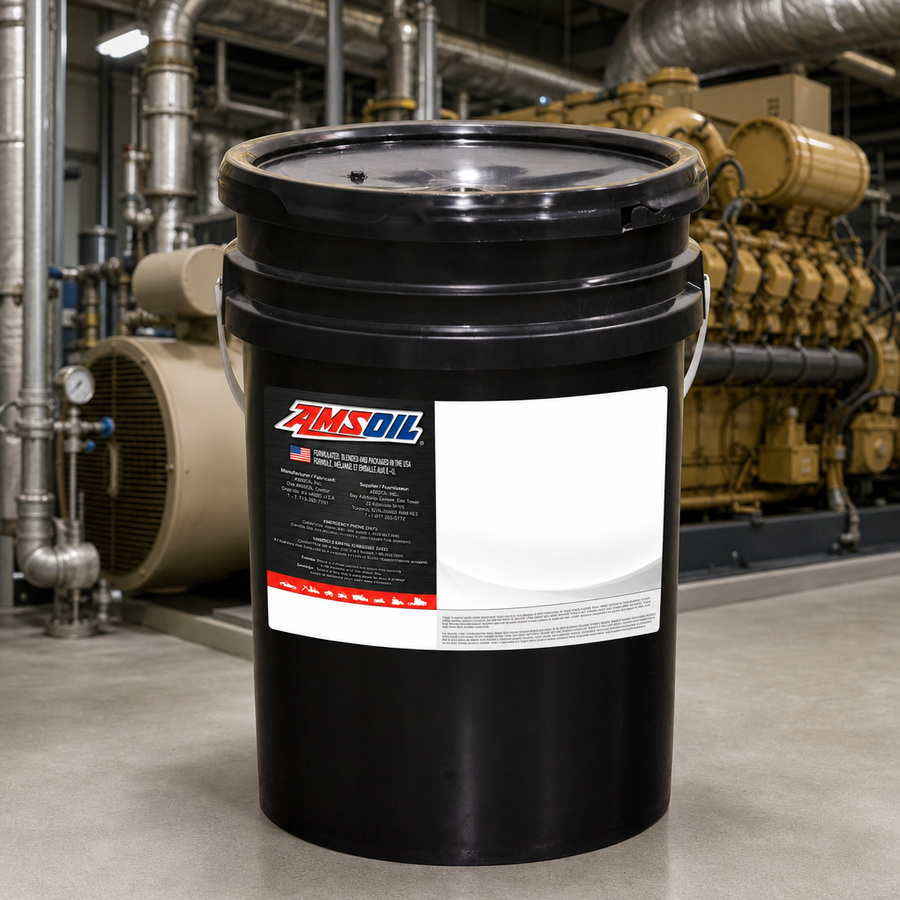
AMSOIL 100% Synthetic Stationary Natural Gas Engine Oil
AMSOIL 100% Synthetic Stationary Natural Gas Engine Oil is a low-ash SAE (20W) 40 lubricant for stationary four-stroke and two-stroke engines fueled by natural gas. The shear-stable multi-grade formulation is built for continuous severe-service duty in compressor stations, gensets, and pipeline equipment that demand steady viscosity, controlled sulfated ash, and resistance to nitration.
Low-ash chemistry for stationary natural gas service
Residual additive metals from conventional motor oil can collect as combustion-chamber ash, foul exhaust valves, glaze cylinder liners, and bridge spark plug gaps. AMSOIL 100% Synthetic Stationary Natural Gas Engine Oil is formulated to a sulfated ash content of 0.46 percent (ASTM D874), inside the low-ash (less than 0.50 percent) window OEMs specify for continuous-duty natural gas service. The result is reduced port blockage, fewer carbon deposits, and longer time between top-end maintenance.
Anti-wear and anti-scuff protection in continuous-duty operation
Compressor-driver and genset duty cycles run for thousands of hours between shutdowns, exposing valve seats, piston rings, cylinder liners, and bearings to sustained boundary-lubrication stress. The advanced anti-wear and anti-scuff additive system in this oil is engineered to control valve recession and protect ring, liner, and bearing surfaces during continual severe-service operation. A Four-Ball Wear Test scar of 0.35 mm (ASTM D4172) and a high-temperature, high-shear viscosity of 4.3 cP (ASTM D5481) keep the oil film intact under load and heat.
Nitration resistance and viscosity stability
Nitration is a dominant aging mechanism in spark-ignited natural gas engines. Methane combustion in a high-NOx environment produces nitrogen oxides that thicken the oil and accelerate oxidation. The synthetic chemistry in this product is naturally resistant to nitration, which keeps viscosity inside the SAE 40 grade window over extended hours on oil.
A 100°C kinematic viscosity of 14.2 cSt (ASTM D445), a 40°C value of 97.5 cSt, and a viscosity index of 149 (ASTM D2270) define a 20W-40 fluid that flows in cool ambient conditions and holds film strength at operating temperature. NOACK volatility of 3.9 percent (ASTM D5800) limits consumption in continuous service, and a pour point of -40°C (-40°F, ASTM D97) supports cold start in unheated genset and remote-pad installations.
High TBN for corrosion and acid control
Pipeline-grade natural gas carries trace contaminants, and field gas, sour gas, and biogas streams add hydrogen sulfide, water vapor, and combustion-derived acids to the crankcase. The balanced additive package delivers a total base number of 5.7 (TBN) while meeting low-ash limits, giving the lubricant the alkaline reserve to neutralize acidic byproducts and protect bearings, copper components, and cylinder liners against corrosion.
Emission catalyst compatibility
Newer stationary engines run with three-way catalysts, oxidation catalysts, or SCR systems that can be poisoned by phosphorus and zinc carryover from the lubricant. AMSOIL 100% Synthetic Stationary Natural Gas Engine Oil is formulated with low zinc and phosphorus levels to prolong emission catalyst life without sacrificing wear protection, helping facilities meet permitted emission limits between rebuilds.
Long-lasting protection verified by oil analysis
Extensive monitoring by oil analysis has shown that drain intervals can be safely extended with this product when supported by a used-oil-analysis program tracking viscosity, TBN, TAN, nitration, oxidation, and wear metals. Field data from AMSOIL customer installations shows the oil holding inside the SAE 40 viscosity grade band and maintaining acid and base numbers above SAE 40 minimums across thousands of hours of service. When extending drain intervals, change the oil filter at the equipment manufacturer's recommended interval.
Recommended applications and service intervals
AMSOIL 100% Synthetic Stationary Natural Gas Engine Oil is recommended for stationary four-stroke and two-stroke spark-ignited engines that require a low-ash (less than 0.50 percent) lubricant and run on natural gas. Typical installations include gas-engine-driven compressors, generators, pump drivers, and stationary gas-engine power equipment. The shear-stable 20W-40 chemistry covers a wide ambient range so a single grade can replace separate summer and winter fills.
- Use the equipment OEM's recommended hours-on-oil interval as the baseline, then extend drain intervals only when supported by an oil-analysis program that confirms viscosity, TBN, nitration, oxidation, and wear metals are within limits.
- Severe service: high-load continuous duty, sour-gas or biogas feed, or elevated operating temperature tightens the oil-analysis trigger thresholds and shortens the safe drain window.
- Not recommended for vehicular applications running on CNG, LNG, or propane, for engines that specify a high-ash automotive or heavy-duty diesel oil, or for racing and modified spark-ignited automotive engines.
- Outside the US and Canada, confirm the product code, package availability, and emission-permit lubricant requirements with the local distributor before specification.
The oil is compatible with conventional petroleum oils and other synthetic lubricants, but mixing shortens service life and reduces performance, so a complete crankcase change is preferred. Aftermarket oil additives are not recommended. Pair the lubricant with the OEM-specified full-flow oil filter, and replace the filter at the equipment manufacturer's interval whenever a drain is extended.
Typical technical properties
| Property | Value |
| Sulfated Ash Content, % (ASTM D874) | 0.46 |
| Kinematic Viscosity @ 100°C, cSt (ASTM D445) | 14.2 |
| Kinematic Viscosity @ 40°C, cSt (ASTM D445) | 97.5 |
| Viscosity Index (ASTM D2270) | 149 |
| NOACK Volatility, % weight loss (ASTM D5800) | 3.9 |
| Flash Point, °C (°F) (ASTM D92) | 254 (489) |
| Fire Point, °C (°F) (ASTM D92) | 282 (540) |
| Pour Point, °C (°F) (ASTM D97) | -40 (-40) |
| Four-Ball Wear Test, Scar mm (ASTM D4172) | 0.35 |
| High-Temperature/High-Shear Viscosity, cP (ASTM D5481) | 4.3 |
| Total Base Number (TBN) | 5.7 |
Order AMSOIL 100% Synthetic Stationary Natural Gas Engine Oil
Available package sizes include the 5 Gallon Pail (ANGS05-EA), the 55 Gallon Drum (ANGS55-EA), and the 275 Gallon Tote (ANGS27-EA). Every order ships from the AMSOIL warehouse and is backed by the AMSOIL Limited Warranty. For application match guidance across other AMSOIL passenger-car and light-truck products, see the AMSOIL vehicle lookup guide and the AMSOIL car oil guide, then place the order through the Order Now link.
Frequently asked questions
What is natural gas engine oil?
Natural gas engine oil is a lubricant formulated for spark-ignited reciprocating engines that burn methane-based fuels rather than gasoline or diesel. The gaseous fuel means no liquid-fuel dilution, but combustion produces nitrogen oxides that attack the additive system. Natural gas engine oils are built around nitration resistance, controlled sulfated ash, and an alkaline reserve sized to the fuel and engine.
What type of oil does a stationary natural gas engine use?
Most modern stationary spark-ignited natural gas engines call for a low-ash multi-grade lubricant in an SAE 30, SAE 40, or 15W-40 grade, with sulfated ash below roughly 0.50 percent and a balanced TBN. AMSOIL 100% Synthetic Stationary Natural Gas Engine Oil is a low-ash SAE (20W) 40 designed to meet that envelope across compressor station, genset, and pump-drive installations.
Can an SF-rated automotive engine oil be used in a stationary natural gas engine?
Substituting a legacy SF-grade automotive oil in a stationary natural gas engine is not recommended. Automotive service categories are written for liquid-fueled engines and typically carry sulfated ash, zinc, and phosphorus levels too high for low-ash gas-engine duty, which can drive valve recession, deposit formation, and emission catalyst poisoning. Use a purpose-built low-ash natural gas engine oil instead.
Is this oil approved for vehicles running on CNG, LNG, or propane?
No. AMSOIL 100% Synthetic Stationary Natural Gas Engine Oil should not be used in vehicular applications that run on propane or natural gas. Mobile alternative-fuel engines have different oil-consumption, emission-system, and viscosity requirements.
How are drain intervals set for AMSOIL 100% Synthetic Stationary Natural Gas Engine Oil?
The starting point is the equipment OEM's recommended hours-on-oil interval. Used-oil analysis tracking viscosity, TBN, TAN, nitration, oxidation, and wear metals can then support extended drains as long as every parameter stays inside engine-builder and lab limits. Filter changes follow the OEM filter interval whenever drains are extended.
Is this oil compatible with conventional petroleum oils and other synthetics?
Yes, but mixing shortens the oil's life expectancy and reduces performance benefits. A complete crankcase change is preferred, and aftermarket oil additives are not recommended.
Why does ash content matter for natural gas engine oil?
Sulfated ash represents the non-combustible additive metals left behind after the lubricant burns. In a stationary natural gas engine those residues build on exhaust valves, glaze cylinder liners, and bridge spark plug electrodes. A low-ash formulation at roughly 0.50 percent sulfated ash and below keeps deposit formation and pre-ignition risk in check while still delivering wear protection, corrosion control, and detergency.